Securing a clinical position or entering a nursing program in Solano County often comes with a strict checklist of credential requirements. For many healthcare professionals, the most confusing step during the onboarding process is determining exactly which American Heart Association life support certification aligns with their specific medical role. If you are reviewing employment paperwork or preparing for a credential renewal in Vacaville, CA, selecting the wrong class can lead to delays in your start date and wasted out-of-pocket expenses.
Basic Life Support (BLS), Advanced Cardiovascular Life Support (ACLS), and Pediatric Advanced Life Support (PALS) serve entirely different clinical functions and target different patient populations. This guide breaks down the core distinctions among these provider tracks, helping you identify exactly which certification your medical board, employer, or academic institution requires.
Key Takeaway: A BLS CPR Certification Course is the mandatory foundation for nearly all healthcare roles, focusing on high-quality chest compressions and AED use. ACLS and PALS are advanced, specialized certifications designed for critical care providers managing complex adult or pediatric emergencies, respectively.
The Foundation: Understanding the BLS CPR Certification Course
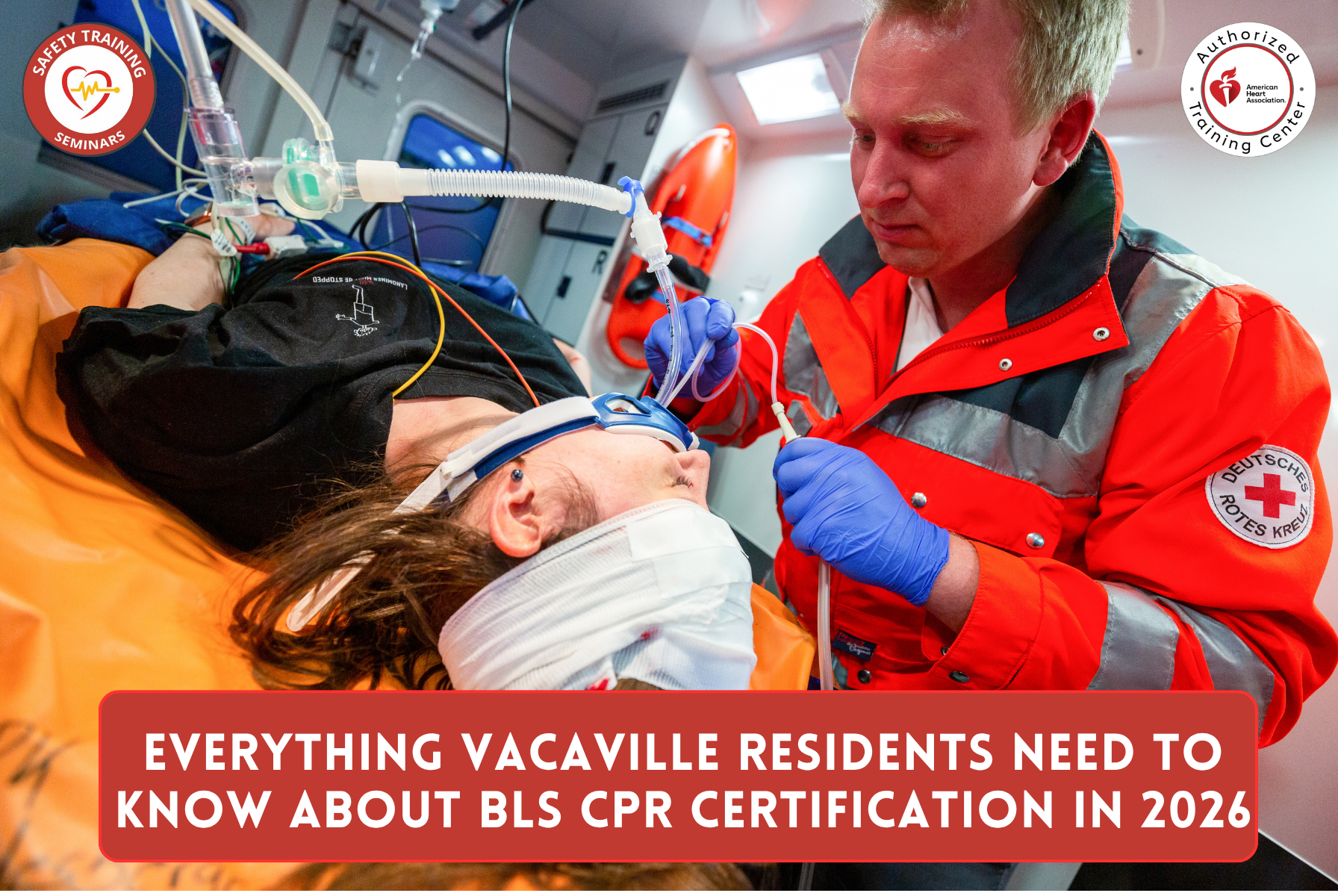
The baseline expectation for almost anyone working in a clinical or emergency environment is Basic Life Support. Unlike standard community CPR classes intended for general workplace compliance, a BLS CPR Certification Course is explicitly designed for healthcare providers operating in team-based resuscitation scenarios.
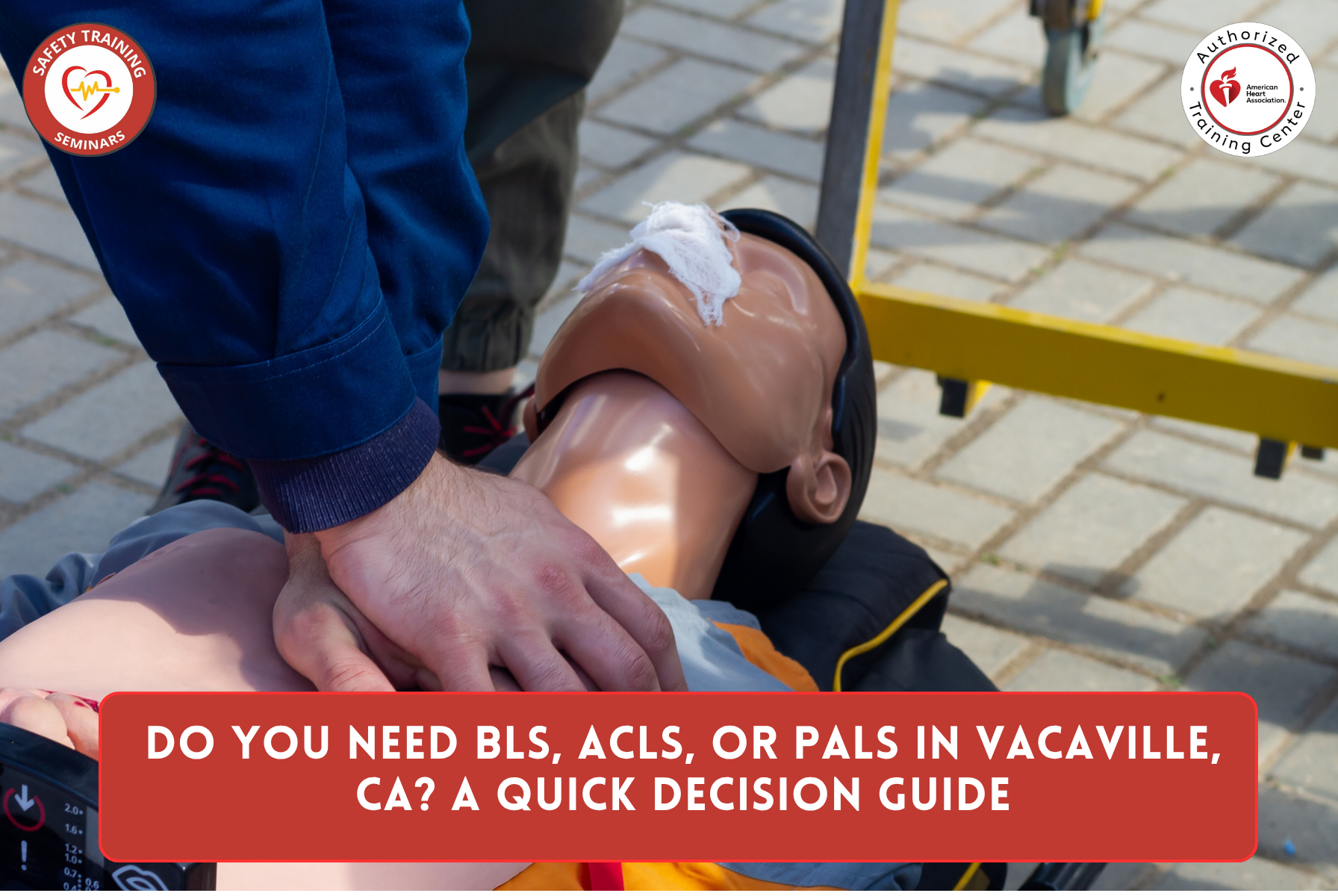
The curriculum emphasizes the mechanics of keeping blood oxygenated and circulating during a cardiac arrest. Participants learn high-quality chest compressions, the use of a bag-mask device for multi-rescuer ventilation, and rapid Automated External Defibrillator (AED) deployment for adults, children, and infants. The training also covers high-performance team dynamics, teaching providers how to communicate effectively during a high-stress medical event.
If you are a registered nurse, licensed vocational nurse, medical assistant, physical therapist, dental hygienist, or nursing student, BLS is your mandatory starting point. Even if your career path eventually requires advanced resuscitation training, maintaining an active BLS card is generally a strict prerequisite across all medical disciplines.
Moving to Critical Care: Advanced Cardiovascular Life Support (ACLS)
While BLS covers the mechanical actions of resuscitation, Advanced Cardiovascular Life Support (ACLS) transitions into medical management and diagnostic interventions. This course is strictly focused on adult patients and requires a solid understanding of basic ECG rhythm interpretation and cardiovascular pharmacology before you even walk into the testing room.
During ACLS training, participants learn to manage acute coronary syndromes, ischemic stroke, and active cardiac arrest. Providers practice utilizing advanced airway equipment, such as endotracheal tubes and supraglottic devices. They also learn to execute algorithms that dictate precisely timed medication administration and electrical therapies like synchronized cardioversion. The course heavily utilizes “mega-code” simulations, where participants must act as a team leader to direct the resuscitation of an adult patient.
ACLS is required for clinicians who direct or participate in adult critical care. This typically includes emergency department staff, intensive care unit (ICU) nurses, paramedics, surgical teams, and telemetry unit personnel. If your patient population consists of acutely ill adults, your facility will likely mandate this advanced credential.
Specialized Care: Pediatric Advanced Life Support (PALS)
Children are not simply small adults; their physiological responses to trauma, respiratory distress, and illness require distinct medical interventions. Pediatric Advanced Life Support (PALS) trains medical providers to recognize and treat respiratory failure, shock, and cardiopulmonary arrest in infants and children.
The PALS curriculum relies heavily on the pediatric assessment triangle—a rapid evaluation tool used to identify the severity of a child’s condition before they decompensate. Providers practice pediatric-specific algorithms, age-based pharmacological dosing, and advanced interventions such as placing intraosseous (IO) lines for rapid fluid resuscitation. Because the primary cause of pediatric cardiac arrest is often respiratory failure rather than primary cardiac events, the course places a massive emphasis on early airway intervention.
Providers assigned to pediatric intensive care units (PICU), neonatal care, pediatric emergency rooms, or outpatient pediatric medical clinics must carry a PALS certification. Like the adult advanced track, PALS builds upon your fundamental CPR skills and requires a valid BLS card to participate.
A Quick Comparison for Solano County Professionals
To simplify your decision before registering for a class, compare your daily clinical duties against the primary clinical focus of each training track:
- BLS: Required for general patient care across all disciplines. Focuses on manual CPR, bag-mask ventilation, and basic AED use across all age groups.
- ACLS: Required for adult critical care. Focuses on ECG interpretation, intravenous medications, and advanced airway management for adult patients.
- PALS: Required for pediatric critical care. Focuses on recognizing pediatric shock, respiratory emergencies, and precise pediatric drug dosing.
Navigating Employer and School Requirements in the Vacaville Area
Solano County medical facilities, outpatient surgery centers, and nursing programs maintain strict compliance matrices regarding staff credentials. Hospital credentialing software automatically tracks expiration dates, meaning a lapsed certification can instantly pull you off the clinical schedule. Before enrolling in any course, you should always consult your human resources department, clinical director, or academic advisor to confirm their exact requirements.
A medical assistant working in a standard Vacaville outpatient clinic may only need BLS. However, a respiratory therapist floating between different hospital departments or a nurse commuting to regional medical centers may be required to hold all three certifications concurrently.
Because commuting across the region is standard practice for healthcare workers, professionals looking for ACLS certification training in Fairfield or nearby CPR and First Aid certification courses in Dixon often seek training centers that offer flexible, blended learning formats. This educational model allows you to complete the cognitive portion of the course online at your own pace, followed by a short, focused, in-person skills verification session to satisfy employer mandates.
Completing Your Certification at Safety Training Seminars in Vacaville
Once you have verified which American Heart Association certification your role demands, scheduling your skills evaluation is the next practical step. Safety Training Seminars provides official AHA courses designed specifically to fit the demanding shift schedules of medical professionals and healthcare students.
The local facility utilizes the AHA blended learning format. This means you do not have to sit in a traditional classroom for eight hours on your day off. You can finish the didactic video modules and written exam at home, and then visit the physical office strictly for your hands-on skills testing with the specialized manikins and training equipment.
The training center is located at: Safety Training Seminars Vacaville CPR Training Center Address: 479 Mason Street, Suite 111, Vacaville, CA 95688
Whether you live locally or are searching for nearby PALS classes for healthcare professionals in Benicia or Suisun City AHA BLS classes, the Vacaville office provides accessible, stress-free certification options. Your official AHA certification card is issued on the exact same day you complete your in-person skills test, ensuring you can submit your paperwork immediately.
Frequently Asked Questions About Life Support Credentials
Can I take ACLS or PALS if my BLS certification has expired?
No. You must possess a current, unexpired BLS provider card to participate in an ACLS or PALS course. High-quality basic life support is the foundation of advanced resuscitation, and instructors expect you to perform perfect chest compressions and ventilations. If your basic certification has lapsed, you will need to renew it prior to or concurrently with your advanced training.
Do Vacaville hospitals accept fully online life support certifications?
The vast majority of healthcare employers, licensing boards, and nursing schools in California do not accept CPR or advanced life support cards earned entirely online. Official AHA guidelines require an in-person, hands-on skills verification with a certified instructor to physically demonstrate clinical competency with the resuscitation equipment.
How long does it take to complete a blended learning course?
The online cognitive portion varies depending on the specific course—typically taking a few hours for BLS and longer for the complex algorithms of ACLS or PALS. The subsequent in-person skills testing at the Vacaville training center is highly efficient and usually takes under an hour to complete.
If I only treat adults in my clinic, do I still need PALS?
Generally, no. If your clinical scope of practice is strictly limited to adult patients (such as working in an adult-only telemetry unit, a geriatric clinic, or an adult oncology ward), ACLS is the appropriate advanced credential. Always confirm this directly with your clinical director to ensure compliance with unit policies.
How long will my AHA certification remain valid?
All official American Heart Association provider cards for BLS, ACLS, and PALS are valid for two years. They officially expire on the last day of the month in which the training was originally completed. It is highly recommended to schedule your renewal course at least a month before this expiration date.
Conclusion
Understanding the specific clinical focus of each life support track is the most reliable way to ensure you register for the correct training. A BLS CPR Certification Course provides the fundamental resuscitation skills required for all medical personnel. ACLS prepares you for complex adult cardiovascular emergencies, while PALS equips you to rapidly intervene when treating critically ill pediatric patients. By checking your specific job description and unit requirements beforehand, you can avoid certification delays and keep your clinical credentials fully compliant.
For healthcare workers throughout Solano County, maintaining these vital requirements does not have to disrupt your entire week. Safety Training Seminars offers flexible, AHA-compliant skills testing to keep you ready for your next shift. To check upcoming availability and find the right course format for your schedule, visit the Vacaville location page and review the current registration options.