Vacaville’s healthcare network, schools, childcare settings, and workplaces all depend on people who can recognize an emergency and respond appropriately. CPR and First Aid education helps prepare individuals to take action when someone experiences cardiac arrest, choking, a serious injury, or another sudden medical emergency.
For healthcare professionals, nursing students, caregivers, and workplace employees, choosing the right course is an important first step. Safety Training Seminars provides a local training option at 479 Mason Street, Suite 111, Vacaville, CA 95688, serving individuals seeking CPR and other emergency-response training in Solano County.
What Should You Expect to Learn in a CPR and First Aid Course?
CPR and First Aid training combines emergency recognition with practical response skills. Rather than focusing only on memorizing information, appropriate training helps participants understand what to look for, when to seek emergency assistance, and how to respond within their level of training.
A CPR and First Aid certification course may cover several important learning areas, depending on the selected program.
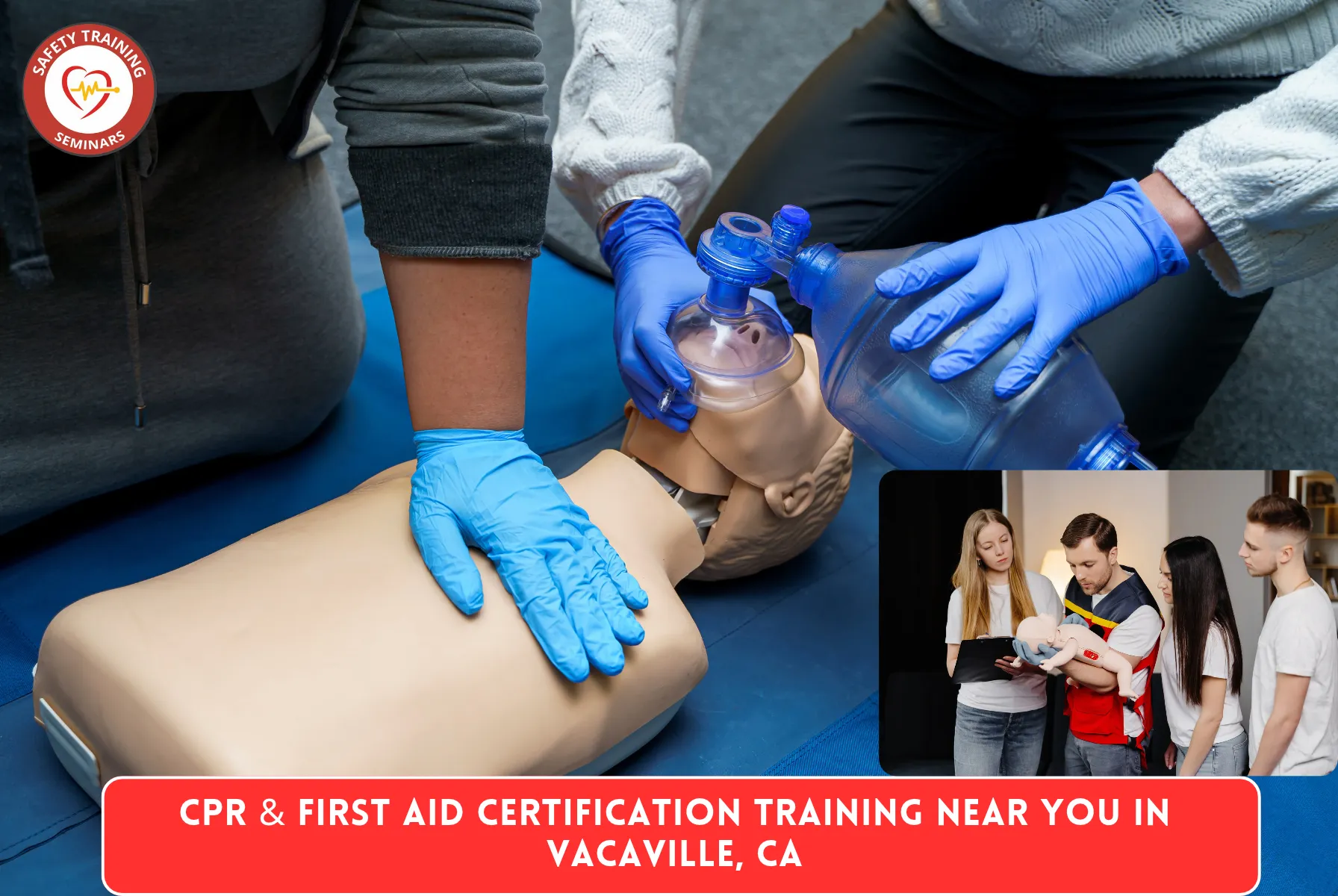
- Cardiopulmonary Resuscitation (CPR): Understanding how to respond when an adult, child, or infant becomes unresponsive and is not breathing normally.
- Automated External Defibrillator (AED): Learning the purpose of an AED and how to follow its voice prompts during a cardiac emergency.
- Choking Emergencies: Recognizing airway obstruction and understanding appropriate choking-response techniques for different age groups.
- First Aid Fundamentals: Learning about emergency response for bleeding, burns, wounds, sudden illnesses, and other common injuries.
- Emergency Recognition: Identifying warning signs that require immediate medical attention and activating emergency services.
The exact subjects depend on the course. For example, a CPR-only program does not necessarily include the same First Aid content as a combined CPR, AED, and First Aid course.
Vacaville’s Healthcare Environment Creates Different Training Needs
Vacaville is an important healthcare location within Solano County. NorthBay Health VacaValley Hospital, located at 1000 Nut Tree Road, provides hospital services and operates a 24-hour emergency department. Its presence reflects the healthcare needs of residents throughout Vacaville and surrounding communities.
The wider healthcare environment also includes outpatient services, clinical practices, and healthcare education. Each setting involves different responsibilities, which means CPR and First Aid training should be selected according to the learner’s role.
For example, a healthcare employee may need provider-level Basic Life Support (BLS), while a childcare worker may need pediatric emergency-response education. A parent or community member may simply want practical CPR and AED skills.
Solano Community College also offers an Associate Degree in Registered Nursing program that combines classroom education with clinical training. Nursing students should review their program’s specific requirements before selecting a CPR or BLS course.
This distinction is particularly important for people preparing for clinical placements or employment in healthcare facilities. Completing a course is useful, but choosing one that satisfies the relevant institutional requirements is equally important.
CPR, First Aid, and BLS: Which Training Is Appropriate?
Not every learner needs the same level of emergency-response education. Understanding the differences between common programs can help Vacaville residents avoid enrolling in a course that does not match their responsibilities.
CPR and First Aid for General Emergency Preparedness
Combined CPR and First Aid training is generally suitable for people who want to develop emergency-response skills for everyday environments.
Potential participants include:
- Parents, guardians, and family caregivers.
- Teachers and childcare professionals.
- Fitness instructors and sports coaches.
- Workplace employees and safety representatives.
- Community members who want to improve their emergency preparedness.
American Heart Association Heartsaver First Aid CPR AED courses are designed for people with little or no medical training who need relevant workplace training or want to prepare for emergencies at home and in the community.
Basic Life Support (BLS) for Healthcare Providers
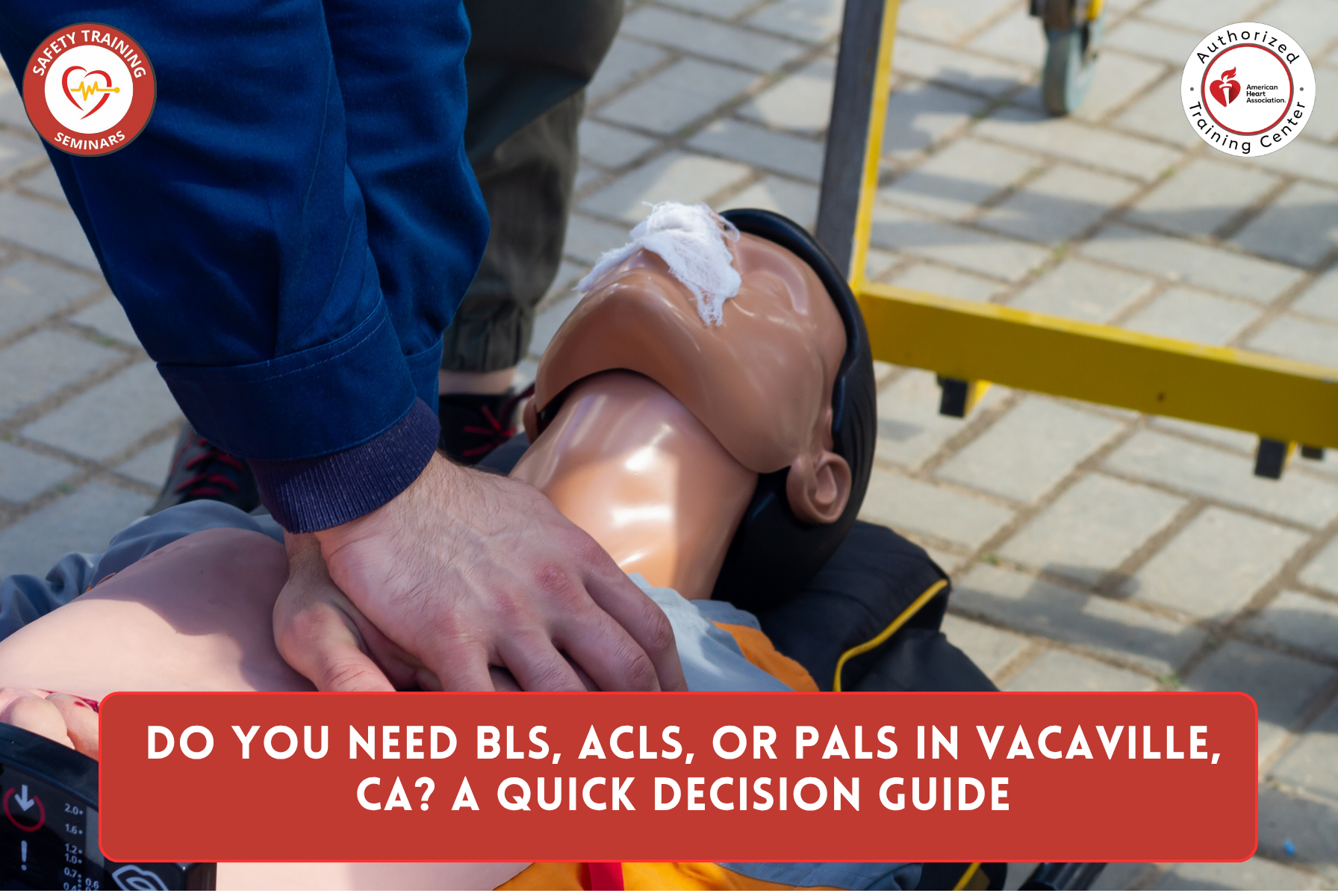
BLS is designed for healthcare professionals and other personnel who need foundational cardiovascular life-support skills.
The training focuses on:
- High-quality CPR.
- Appropriate rescue breathing and ventilation.
- AED operation.
- Recognition of life-threatening emergencies.
- Individual and team-based resuscitation skills.
Nurses, physicians, medical assistants, dental professionals, and other patient-facing healthcare workers may need BLS depending on their employer or educational program.
Advanced Courses for Specialized Responsibilities
Some healthcare professionals require additional training beyond basic life support.
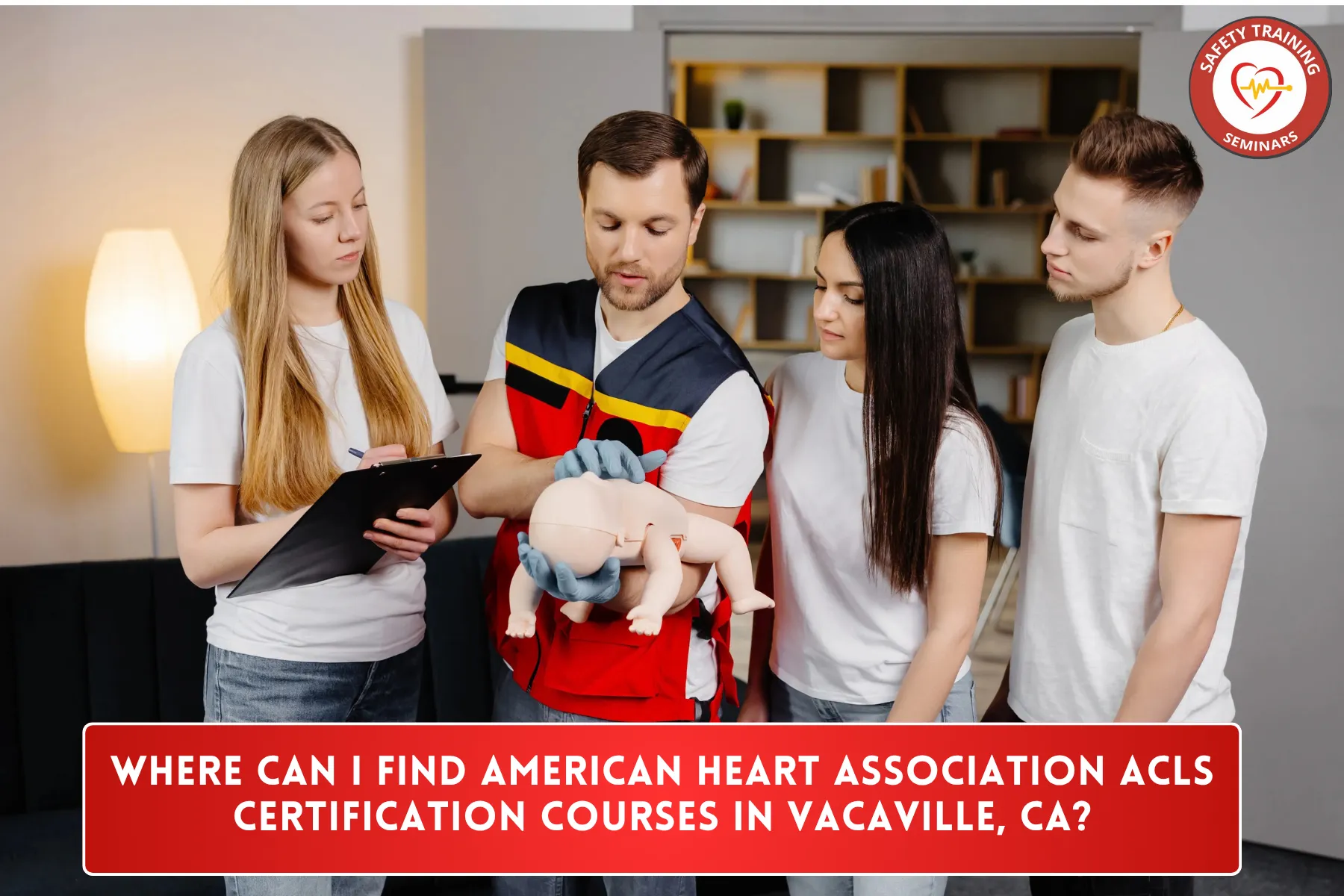
- ACLS: Advanced Cardiovascular Life Support focuses on managing serious cardiovascular emergencies, including cardiac arrest and certain life-threatening heart rhythms.
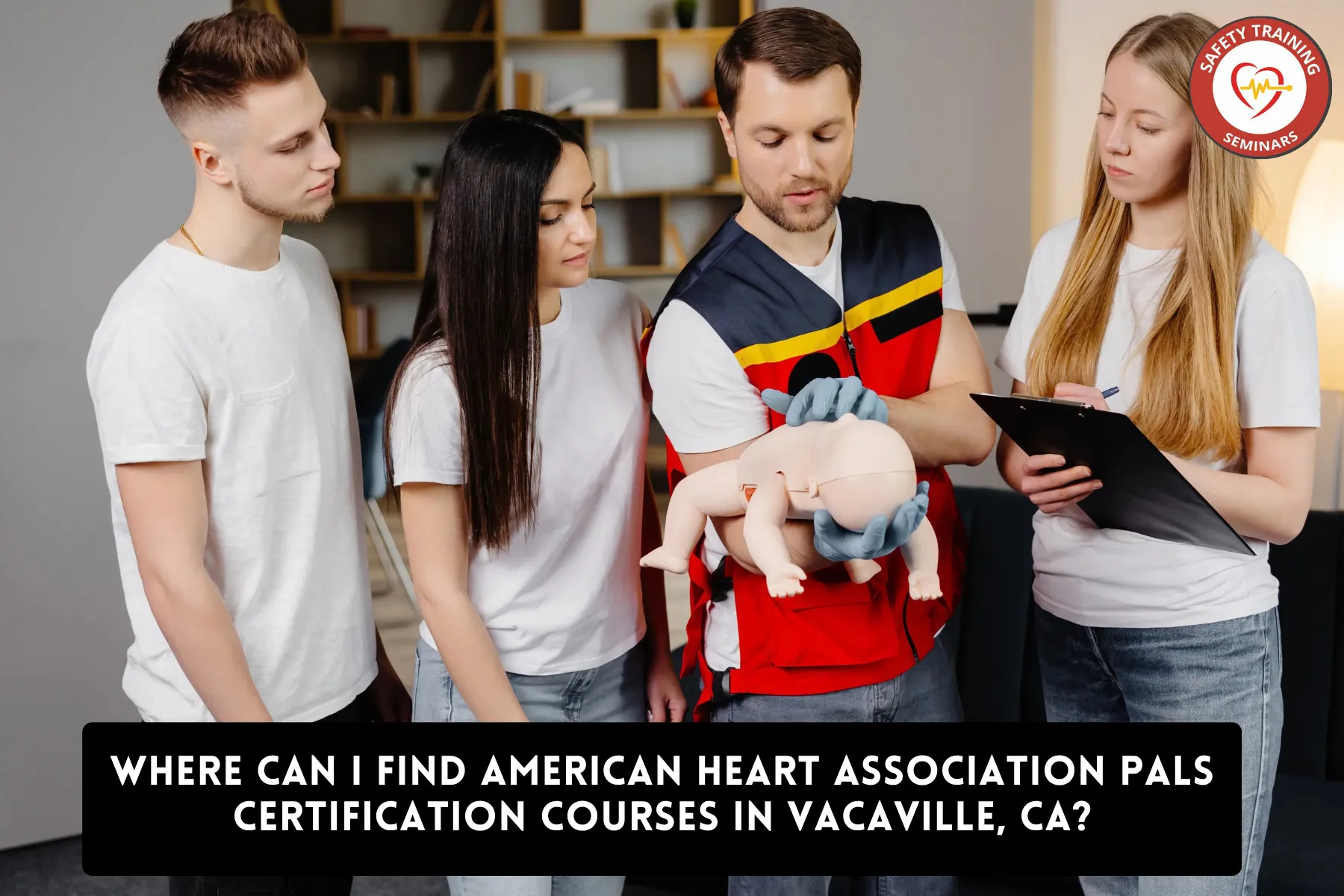
- PALS: Pediatric Advanced Life Support addresses the assessment and management of serious emergencies involving infants and children.
These advanced programs are intended for appropriate healthcare audiences. They should not be treated as interchangeable with general CPR and First Aid training.
Where CPR Skills Can Make a Difference in Vacaville
Emergency-response knowledge has practical applications well beyond hospitals. Different environments present different risks, and people who understand basic response principles may be better prepared to assist while professional help is on the way.
Healthcare facilities and medical offices: Clinical staff may encounter patients experiencing cardiac arrest, breathing difficulties, or sudden changes in condition. Healthcare-provider BLS training helps prepare appropriate personnel for these situations.
Schools and childcare facilities: Teachers, childcare employees, and school support staff may need to respond to choking, injuries, or medical emergencies involving children. Pediatric CPR and First Aid education can help address these responsibilities.
Workplaces and commercial environments: Offices, retail businesses, warehouses, and other workplaces benefit from employees who understand emergency procedures and know how to recognize when someone needs immediate assistance.
Homes and community settings: Parents, caregivers, and family members can benefit from understanding CPR, AED awareness, and basic First Aid. These skills are relevant when emergencies involve relatives, friends, neighbors, or other community members.
The purpose of training is not to replace emergency medical professionals. It is to help individuals recognize emergencies, take appropriate initial action, and understand their responsibilities until additional assistance becomes available.
Choosing a Course That Matches Your Professional or Personal Goals
Before registering for a CPR and First Aid certification class, take time to identify what you actually need. The course title alone may not tell you whether the program meets your requirements.
Consider these five factors:
- Your intended audience: Determine whether the course is designed for healthcare providers, workplace employees, childcare professionals, or the general public.
- Required training level: Check whether you need CPR and First Aid, BLS, ACLS, or PALS.
- Practical skills assessment: Find out whether the course includes the required hands-on practice and skills evaluation.
- Completion documentation: Confirm what type of course completion card or documentation is provided.
- Employer or school requirements: Verify the accepted training organization, course type, and completion conditions with the relevant institution before enrolling.
Understanding the AHA Course Completion eCard
For applicable American Heart Association courses, successful participants receive an AHA Course Completion eCard after meeting the course requirements.
The eCard provides electronic documentation of course completion and can be verified through the American Heart Association’s official eCard system. The AHA explains that course completion cards are generally valid for two years through the end of the month in which they were issued.
It is important to understand that an AHA Course Completion eCard is not a professional license. It documents successful completion of the relevant training; employers and educational institutions determine whether that course meets their individual requirements.
Find Local CPR and First Aid Training in Vacaville
For residents who prefer a local training option, Safety Training Seminars has a Vacaville training center at:
Safety Training Seminars: 479 Mason Street, Suite 111, Vacaville, CA 95688
The location provides a convenient option to explore when researching CPR and emergency-response education in the Vacaville area.
People traveling from Fairfield, Dixon, Suisun City, and other nearby Solano County communities can also review the available training information when considering their options.
Safety Training Seminars offers different healthcare and emergency-response training pathways. However, course availability, formats, and enrollment details can vary. Review the specific program before registering to make sure it matches your professional or personal requirements.
If you are comparing local options, explore CPR and First Aid training in Vacaville to review the available course information.
Preparing for Your Upcoming Training
A little preparation can make your learning experience more productive.
Before attending or beginning a course, consider the following:
- Confirm the exact course name and intended audience.
- Check whether you need an initial course or a renewal.
- Review any employer or school documentation requirements.
- Understand whether your selected learning format includes an in-person skills session.
- Follow the registration instructions and check the latest schedule.
- Allow sufficient time to complete the required learning and skills assessment.
For blended-learning programs, completing an online portion does not necessarily mean the entire course is finished. The American Heart Association explains that courses requiring psychomotor skills may also require an in-person hands-on session before the course completion card can be issued.
Frequently Asked Questions
1. Where can I find CPR and First Aid certification classes in Vacaville, CA?
Safety Training Seminars lists a Vacaville training location at 479 Mason Street, Suite 111, Vacaville, CA 95688. Prospective participants can review its course information and confirm current registration details before visiting.
2. What is the difference between CPR and First Aid training and BLS?
CPR and First Aid courses generally address emergency response skills for the public and workplace environments. BLS is designed for healthcare professionals and other personnel who need more extensive foundational life-support training, including CPR, ventilation, and AED skills.
3. Do nursing students need BLS training?
Many nursing programs and clinical placements require BLS training, but requirements vary. Nursing students should confirm the accepted course type and training organization with their educational institution before registering.
4. How long is an American Heart Association course completion card valid?
AHA course completion cards are generally valid for two years through the end of the month in which they were issued. Participants should check their individual card and employer renewal requirements.
5. Can people without healthcare experience take CPR and First Aid classes?
Yes. General CPR and First Aid programs are available for people without medical backgrounds. Parents, teachers, childcare workers, fitness professionals, workplace employees, and community members can explore courses appropriate for their needs.
Build Your Emergency Response Skills in Vacaville
Knowing how to respond to a medical emergency is a valuable skill for healthcare professionals and everyday community members alike. Whether you are preparing for a clinical placement, meeting workplace training requirements, or learning CPR to help protect your family, selecting the appropriate course is an important decision.
Safety Training Seminars provides a local starting point for exploring CPR, First Aid, and healthcare training opportunities in Vacaville. Review the available Vacaville CPR and First Aid certification classes, confirm the course requirements that apply to you, and check current registration information before enrolling.